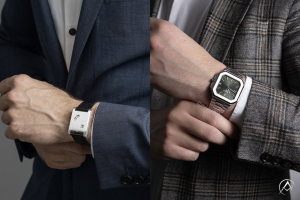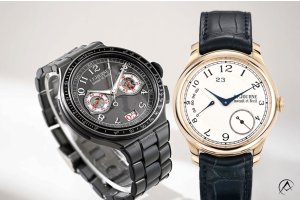

In the world of luxury watches, there are certain metals that stand out. Of course, you will see many watches made from stainless steel. Often, these steel watches are considered classic components of a luxury watch collection. Everyone needs a steel Rolex Submariner or a 1970s stainless Audemars Piguet Royal Oak, after all.
But in our modern competitive market, many elite watchmakers have turned to unique metals and alloys that go above and beyond, upping the ante on what luxury looks like. Today, we are going to take a closer look at the metals you will see across brands like Patek Philippe, Audemars Piguet, Rolex, Richard Mille, and others. We will discover what makes each material special and unique, and you will feel empowered to choose a metal that suits your taste, lifestyle, and budget.
Stainless Steel
We begin with stainless steel, a stalwart of the luxury watchmaking industry since the 1970s. While “precious metals” like gold had been the favored materials of high-end watches until that time, the 1970s introduced a wrinkle to Swiss watch houses. Japanese watchmakers were creating quartz watches that were functional and cheap, making Swiss creators wonder if they would be able to hold onto their market share.
To compete, a couple of iconic stainless steel luxury watches hit the market: the Audemars Piguet Royal Oak and the Patek Philippe Nautilus. Both of these sporty, sleek watches paired just as well with a round of golf as they did with a round of drinks after a successful deal closed in the boardroom. As such, both have gone on to be staples of any legitimate collector’s inventory.
Stainless steel is a versatile metal that is known primarily for its durability. It is more resistant to scratches or dents than precious metals like gold and silver. It also resists tarnishing and corrosion, making it ideal for everyday wear and water resistance. Stainless steel can be finished in a variety of different styles, including polished, brushed, and matte looks, adding to its versatility and diversity of aesthetics. This low-maintenance metal is built to last, so your stainless steel watch will look just as good in 20 years (or even 50 years) as it does right now.
If you are considering a stainless steel watch, you cannot overlook an Audemars Piguet Royal Oak. Yes, we have mentioned this watch a few times, but with good reason. You might even consider the Royal Oak line the original stainless steel dress watch. But remember, stainless steel does not mean low-end. Stainless steel watches have become a staple of the luxury watch industry, and this workhorse of a metal has been elevated to stand out among even prestige materials like titanium and platinum.
The perfect example? This gorgeous Royal Oak Chronograph watch, which pairs timeless stainless steel with a silver index dial and pristine chronograph functionality. The 41 mm face is endlessly versatile and works on any wrist, no matter your gender. This is without a doubt a transformative piece that will elevate your collection tenfold.

Platinum
A rare, silvery white metal that has countless applications in both jewelry and the industrial sector, platinum has been deemed one of the best metals for watchmaking. Like stainless steel, it is durable and tarnish resistant. It is also more difficult to scratch than gold or silver. Unlike some other metals, platinum is displaced rather than lost when it scratches. This means that if you manage to scratch your platinum watch, you can fix the scratch through polishing and none of this precious material will be sacrificed.
It is also worth noting that platinum is naturally hypoallergenic, meaning that is a great choice for anyone who has sensitive skin or metal allergies. Additionally, platinum tends to hold its value, meaning that watches and jewelry made from this elite material retain their market price over time, and some can even increase their value. Talk about a good investment!
Because platinum is more rare than gold, it typically comes with a steeper price tag and has a reputation as an elite metal that is highly desirable. It is also generally more pure than gold in jewelry. Platinum is typically 95% pure in jewelry applications, whereas 18K gold is the most common for jewelry, offering 75% purity. Here is a beautiful example of platinum in our very own Diamonds by Avi & Co. floating diamond necklace:

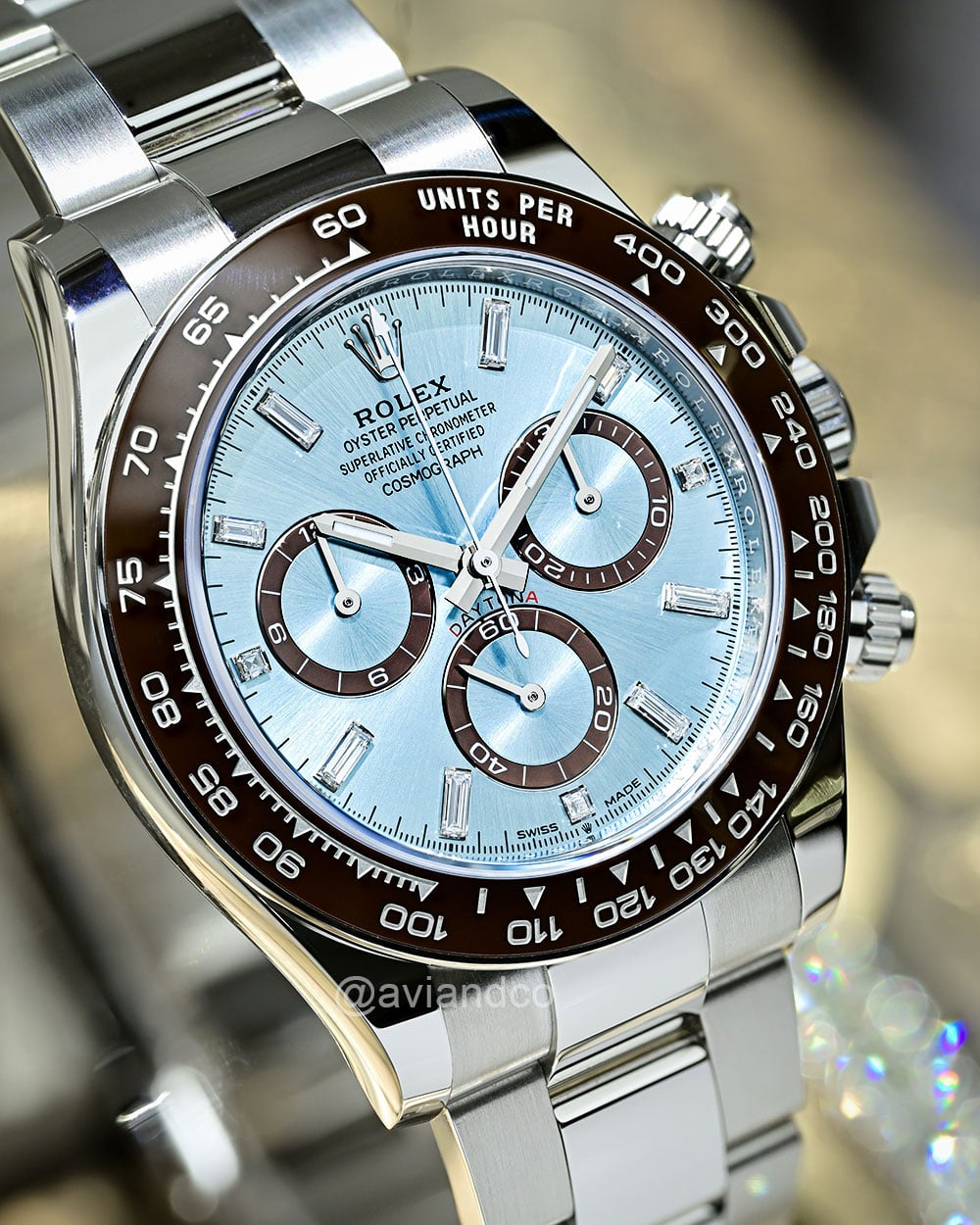
When it comes to watches, platinum is harder to find than gold or stainless steel. That makes platinum watches stand out in a crowded market, and many watchmakers reserve platinum for special editions or unique lines. For example, the platinum Rolex Daytona is part of a larger line, but it has some distinctive components. The ice blue face you see on this watch is reserved for platinum timepieces, making this watch immediately recognizable as a truly elite investment.
Gold and Gold Alloys: White, Yellow, and Rose
When you think of precious metals, gold and silver are probably the first materials that come to mind. However, it is quite uncommon to use silver in watchmaking. Why? While silver is more affordable, it is also more prone to tarnishing and scratching, especially when it comes to jewelry and accessories that are worn daily or in high-touch areas, such as engagement rings and luxury watches. When you see a metal that looks like silver on a luxury watch, it is probably white gold, which is more durable and has an alloy composition that makes it scratch-resistant.
Now, gold does not mean just one thing in the watch and jewelry space. You will see white gold, rose gold, and yellow gold. So, what is the difference between these metals? Is it just color? Let us break it down.
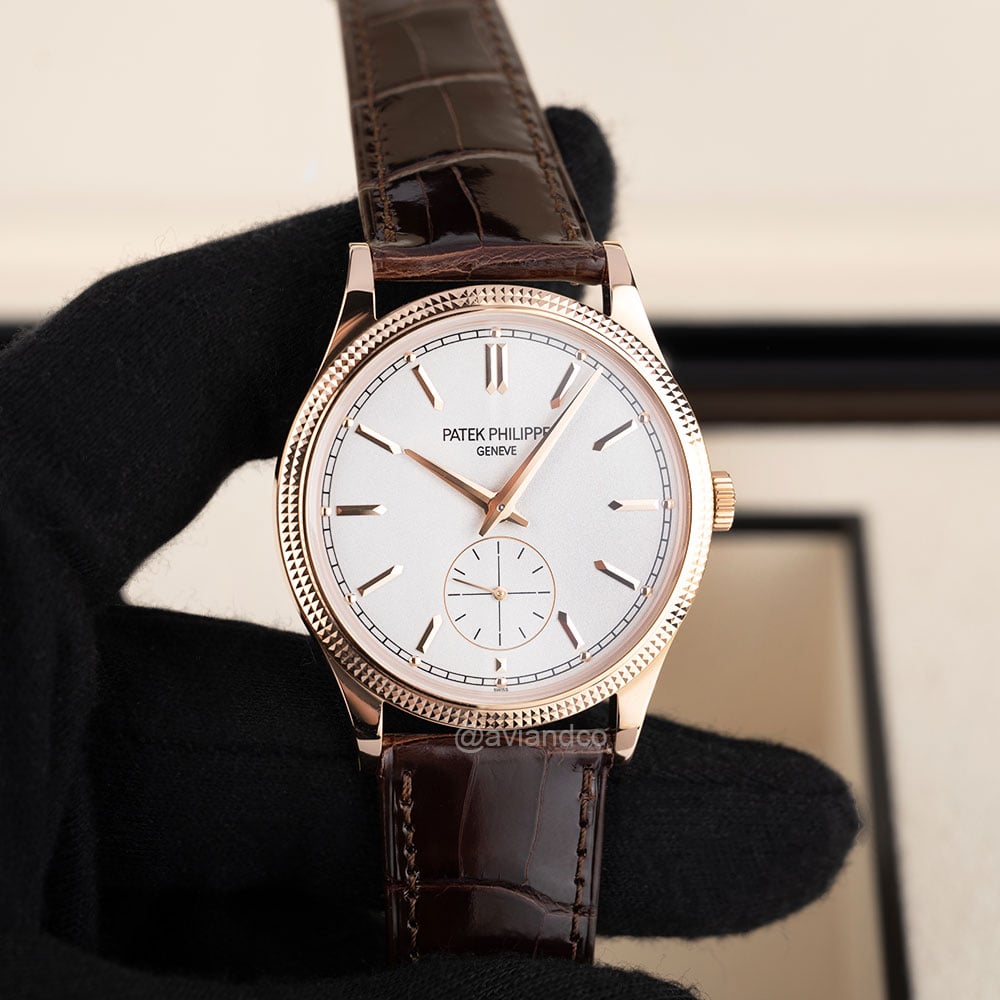
Gold watches are timeless and classic, and they can add a dressier element to any ensemble. However, they can be more susceptible to scratching than platinum, titanium, or stainless steel. Still, many people love the warm tones of gold and rose gold, which cannot be replicated. For example, we love the look of this striking Patek Philippe Calatrava, which features an inviting rose gold case paired with a brown leather strap.
Titanium
Modern, sporty watches like creations from avant garde watchmaker Richard Mille, have been gravitating toward titanium. This metal is known for its impressive strength-to-weight ratio, meaning that it is both light and incredibly durable. While platinum and stainless steel have a certain heft to them that feels luxurious on the wrist, titanium offers a more aerodynamic, barely-there feel that is perfect for high-performance watches and dynamic pieces.
Titanium is very scratch-resistant, and it is perfect for everyday wear, as you will almost never see evidence of its lifespan. Its light weight makes it comfortable, especially for those who are not used to heavy jewelry or watches. Titanium also has a unique matte appearance, though it can be polished for a different look. Creators like Richard Mille, however, have leaned into the matte nature of this metal, which lends itself to a contemporary, sleek look. Titanium is typically more affordable than platinum, and it is also hypoallergenic, making it good for anyone with sensitive skin.
Looking for a prime example of a titanium watch? Check out this RM 11-02, a flyback chronograph with a skeletonized dial. The hefty, 50 mm case of this watch might be too heavy if it was crafted from anything else, but the lightness of titanium makes wearing such a substantial timepiece feel like a breeze. This sophisticated, technically masterful piece is a definite standout in any watch collection.

Dive Into Luxury at Avi & Co.
Are you ready to revamp your watch collection with prestige metals and world-renowned brands? If so, it is time to shop ‘til you drop at Avi & Co. We are New York City’s premier reseller of the best timepieces from around the globe. You can also find us in Aspen and Miami.
Make an appointment with us today to reserve your personalized shopping experience.