

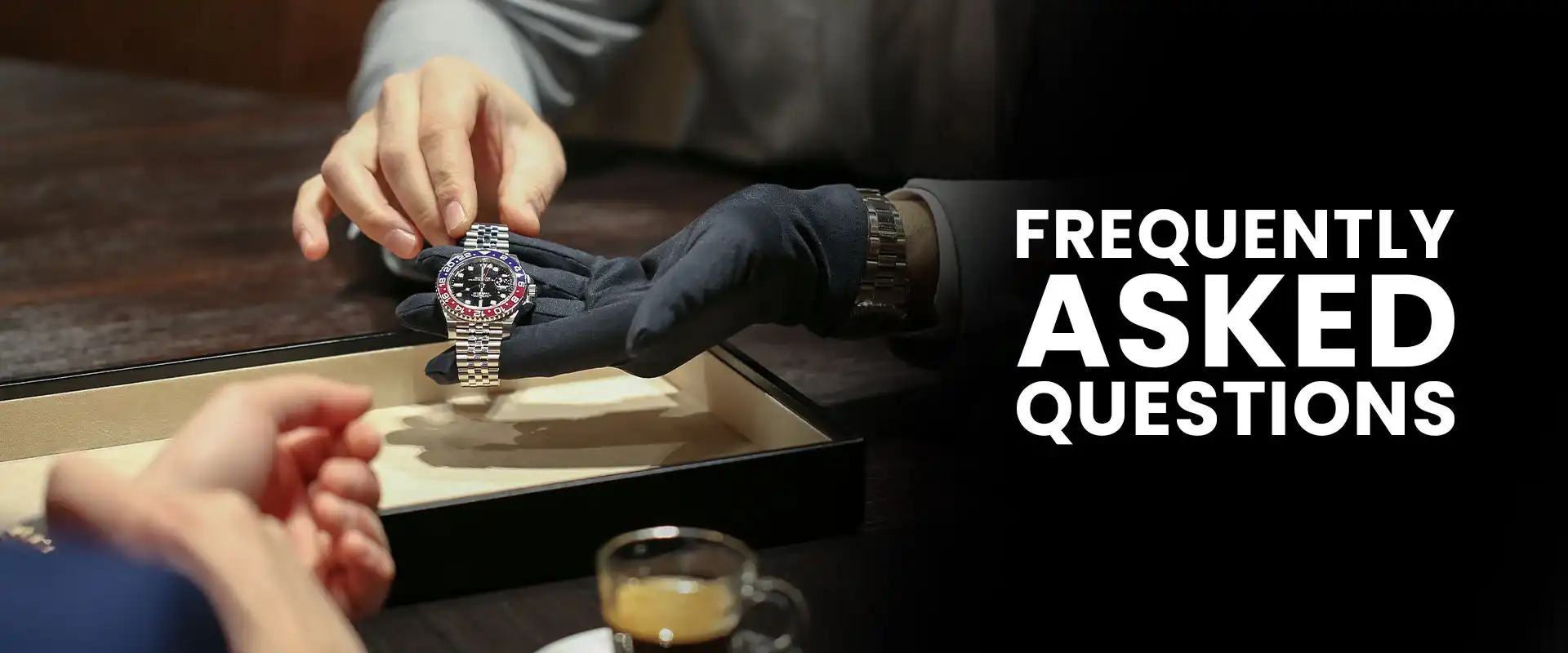
Discover the answers to your most common questions about the luxury timepieces we offer at Avi & Co. As specialists in premier brands like Rolex, Audemars Piguet, Patek Philippe, and Richard Mille, we’re here to guide both new and seasoned collectors through the world of high-end horology. If you’re unsure what you’re looking for, visit any of our showrooms in New York City, Aspen, or Miami, where our knowledgeable team can help you find the perfect watch. In the meantime, explore these wristwatch FAQs to learn more about the craftsmanship and tradition behind today’s most exceptional timepieces.
Watch Movements & Performance
Learn how luxury watch movements operate and how different functions affect performance.
- How does a chronometer differ from a chronograph?
A chronometer is a type of watch that is certified as exceptionally accurate, meaning the watch remains within +6 and -4 seconds per day. Chronometer watches are considered the gold standard of timekeeping and require rigorous testing in order to hold this coveted title. Most luxury watch brands invest in the time and effort to ensure all of their pieces are certifiably chronometers. For example, every watch in Rolex's lineup contains a chronometer-certified, in-house movement.
A chronograph is also a type of watch. Chronograph watches include a stopwatch complication, meaning the timepiece can be used as a stopwatch or to simply display the time. These watches typically have two or three subdials that display the hours, minutes, and seconds. While most luxury timepieces are certified chronometers, not all upscale watches have a chronograph function. Some well-known chronograph models include the OMEGA Speedmaster and the Rolex Daytona.
- What is the difference between an automatic movement and a quartz movement? Watches that use quartz movements are powered by batteries. Watches with automatic movements, on the other hand, do not require a battery. Automatic watches essentially “charge” themselves through the movement and energy of the wearer’s wrist, automatically winding the mainspring. Some watch experts argue that quartz watches may be more accurate, as automatic watches can be off by a couple of seconds. However, the self-sufficiency and artistry behind automatic watches make them very appealing to many luxury watch collectors.
- What is the difference between a self-winding and a manual-winding movement? Automatic watches are powered by a self-winding movement. This means that when the wrist moves, the rotor spins and winds the watch again by tightening the mainspring. A manual-winding movement doesn’t have a rotor and needs to be wound by hand to work. Manual watches should typically be wound every morning or evening, ideally at the same time every day. Most manual watches have a power reserve of around 40 hours, so if you forget to wind it for a day or two, it will stop telling the time accurately. Some high-end manual watches have a slightly longer power reserve of about 70 hours.
- What does power reserve mean? A power reserve on a watch helps you determine how long your watch will run before it needs to be wound again. For an automatic watch, this simply means you will need to wear the timepiece in order for your natural wrist movement to automatically spin the rotor. A manual watch will need to be wound by hand. Our rule of thumb? A good power reserve is at least 48 hours.
Watch Features & Components
Understand the materials, functions and design details found throughout modern luxury watches.
- What is a cyclops lens? The cyclops lens was invented by Rolex in the 1950s. Its purpose is to magnify the date display for easier readability. You will see a cyclops lens in action on a number of different modern Rolex models, including the Rolex Day-Date, the Rolex Datejust, and the Rolex Submariner.
- What are the different case types on a watch?
There are many different case types in today’s watch world, as the materials that heritage watchmakers use continue to grow in number. Here are a few of the most popular watch case options...
• Gold – Comes in variations of yellow and rose, and it will withstand the test of time.
• Platinum – Most expensive, heavy, and highly durable.
• Stainless Steel – Affordable, durable and popular amongst sport watches.
• Titanium – Stronger durability with a lighter weight.
• PVD/DLC Coated – Durable case, scratch-resistant, unique and sleek black color.
• Bronze – Although susceptible to corrosion, it creates a beautiful patina effect over time.
• Ceramic – Lightweight with a wide variety of color options.
• Carbon TPT/NTPT – New-age material with enhanced lightness and durability, most often seen in Richard Mille watches. - What are complications in watches? A complication in a watch refers to any function that a watch performs other than telling the time. Some common complications that we see in the luxury watch world include a chronograph (stopwatch), a date display, a perpetual calendar, a day of the week display, a moon phase display, or a secondary time zone display. These complications add to the functionality of a watch and showcase the intricate mechanics and innovative designs of high-end watchmakers.
- How long does a watch battery last? Depending on the type of watch, a watch battery can last about two years. You will know when the battery needs to be changed when the watch doesn’t show the correct time, it’s difficult to adjust, there’s moisture or rattling in the case, or if the watch simply stops working. Watches with quartz movements require batteries. Those with automatic or manual movements do not.
Watch Care, Maintenance & Authenticity
Protect your timepiece and learn when to seek professional assistance.
- How do I wind my manual watch? To wind your manual watch, first take your watch off your wrist to ensure there is no strain on the watch’s mechanics. Carefully pull out the crown. Wind the crown clockwise until you feel resistance. Do not continue to wind after you feel that resistance, as you could strain the mechanism. Press the crown back down. For best performance, wind your watch daily (even if the power reserve exceeds 24 hours). Most watches reach maximum power by winding the crown between 30 and 40 rotations.
- How do I take care of my watch?
Caring for your luxury timepiece properly is an important part of ensuring its longevity for generations to come. Here are a few tips for caring for your watch, which will help you keep it looking gorgeous and telling the time accurately:
• Keep your watch wound daily and be careful not to overwind.
• Use a microfiber cloth or toothbrush to keep it clean. A little water is okay, but never use soap as it could seep into the mechanics of the watch.
• When you’re not wearing your watch, ensure that you store it away from damp or extreme temperatures.
• Wearing your watch regularly helps keep the watch in good condition.
• Get your watch serviced to ensure everything is running as smoothly as possible. We recommend having your watch professionally serviced every four or five years. - When should I get my watch serviced? How often you need to get your watch serviced depends how often the watch is worn and if the battery has stopped working. As a rule of thumb, your watch should be serviced every four to five years. If you wear the watch regularly, you could wait a bit longer. A watch service will generally consist of disassembling the watch, cleaning it, and replacing any damaged parts.
Buying, Collecting & Understanding Value
Explore common questions about purchasing, building a collection and understanding luxury watch pricing.
- When is the best time to buy a watch? The best time to buy a watch is now! On the whole, the market for watches is relatively steady – so there is really no bad time to purchase a luxury timepiece. Plus, watches from well-known brands like Rolex, Audemars Piguet, Patek Philippe, and Richard Mille tend to hold their value on the secondary market (or even gain value if the watch is discontinued or becomes a celebrity favorite, for example). Investing in a luxury timepiece is investing in your personal style and an heirloom accessory that you can pass down for generations to come.
- What advice do you have for someone who is starting their watch collection? For someone who is starting their watch collection, our top piece of advice is to do research on the watch market – but ultimately, buy what you like and choose a piece you actually want to wear. It is also important to work with a consultant you trust. Here at Avi & Co., our expert customer service team is invested in helping each and every one of our customers find the perfect timepiece for their individual needs. While it is important to set a budget while shopping for a watch, we would also encourage you not to settle. It is better to spend a little extra to get the timepiece you really wanted than to leave with one you are not 100% sold on.
- How can I spot a fake watch? There are many ways to spot a fake watch on the secondary market – but the most important way to stay away from fakes is to make sure you buy from a trusted source. You can spot a fake watch by any unfinished edged, print of the logo, feel of the metal, scratches or improper polish. Make sure the clasp, buckle and crown work. Train your eye by researching and inspecting real watches. If you can’t tell if a watch is fake or don’t trust the source, bring the watch to a corporate service center to be checked.
- Why are some watches so expensive? Upscale watches from premium brands tend to be expensive, and some can even carry six-figure price tags (or more). Why? Luxury watches are available in a limited quantity because of the cost of producing the watch itself, raw materials and precious metals used, custom machinery, and the time it takes to design complicated movements, prototypes and build custom parts. At the end of the day, you’re buying a piece of art.